
Understanding Macronutrients: A Foundation for Better Health
When people think about improving their diet, they often focus on calories. Calories certainly matter, but they are only part of the story.
The foods that provide those calories—and particularly the balance of protein, carbohydrates, and fats—can influence hunger, muscle mass, blood sugar, cholesterol, exercise performance, and overall metabolic health.
These three nutrients are called macronutrients.
Protein: More Than Just a Muscle-Building Nutrient
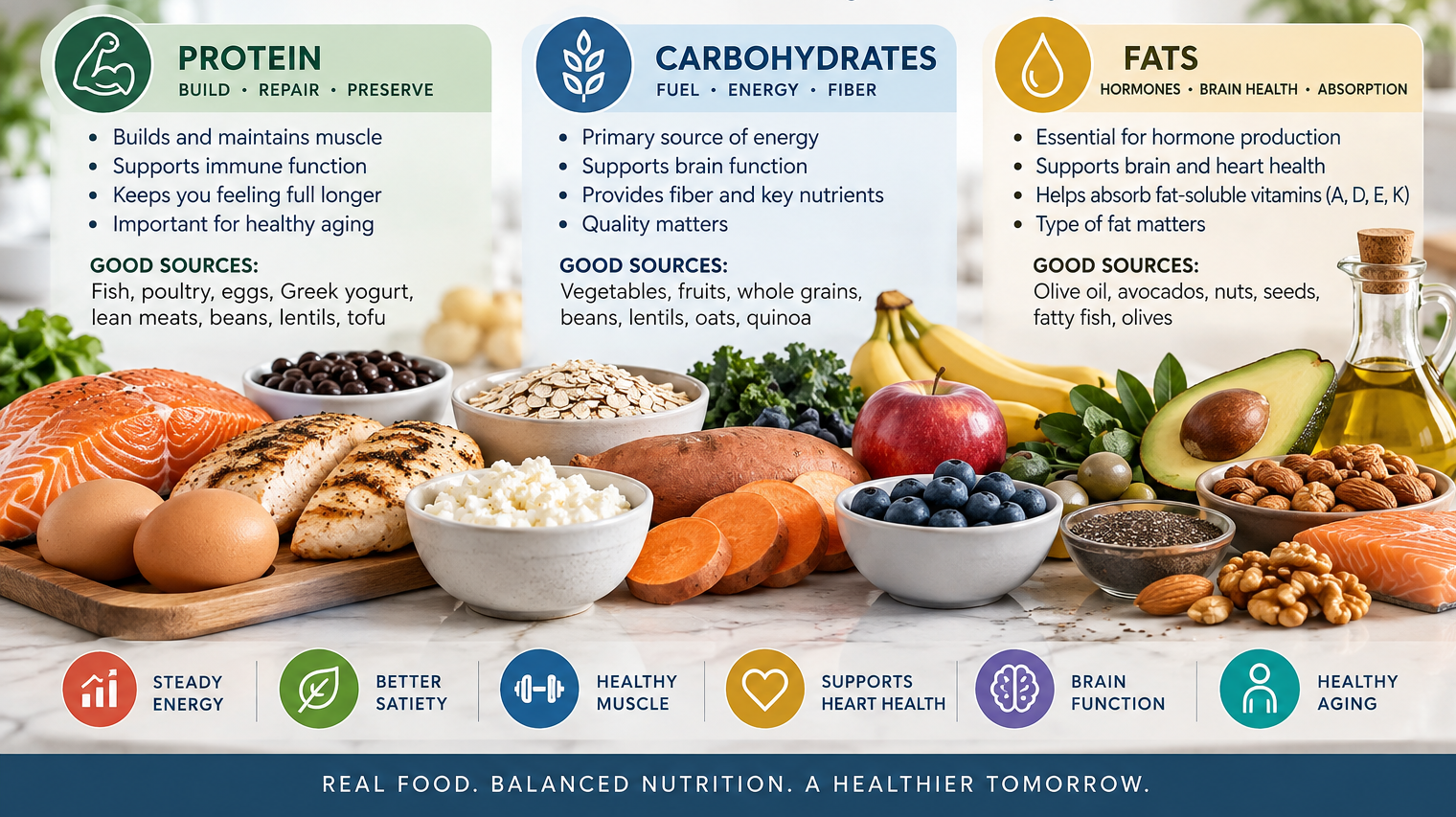
Protein supplies amino acids that your body uses to maintain and repair muscle and other tissues and to produce enzymes, hormones, and many other important molecules.
Maintaining muscle becomes increasingly important as we age. Beginning in middle age, adults gradually lose muscle unless they actively work to preserve it. Resistance training and adequate dietary protein are two of our most effective tools for fighting this age-related decline.
Protein also tends to be satiating, which can make it easier to control appetite. Try swapping out some carbs for some protein and you will see that you stay fuller for longer, with less snacking required throughout the day.
Good protein sources include:
- - Lean meats
- - Fish and seafood
- - Poultry
- - Eggs
- - Greek yogurt and cottage cheese
- - Beans and lentils
- - Tofu, tempeh, and other soy foods
Protein requirements vary considerably with age, body size, activity level, and health goals. A good starting point is to aim for 0.7 g of protein per pound of body weight. As an example, a 150 lb person would aim for 105 g of protein per day (150 lb × 0.7 grams = 105 grams per day).
Carbohydrates: Quality Matters
Carbohydrates are an important source of energy, particularly during higher-intensity physical activity. However, not all carbohydrates are metabolically equivalent.
Whole-food carbohydrate sources such as vegetables, fruits, beans, and minimally processed whole grains contain fiber, vitamins, minerals, and other beneficial compounds.
Highly refined carbohydrates—such as sugary drinks, candy, many desserts, and foods made predominantly from refined flour—are generally absorbed more rapidly and can produce larger spikes in blood glucose, which we want to avoid as much as possible.
This does not mean carbohydrates are inherently unhealthy. Instead, carbohydrate quality, quantity, and the overall meal matter. Combining carbohydrates with protein, fiber, and healthy fats can also slow digestion and moderate the glucose response to a meal.
Fat: An Essential Nutrient
Dietary fat is necessary for cell membranes, hormone production, absorption of fat-soluble vitamins, and many other physiological functions. However, the type of fat matters.
Saturated fat is found in foods such as butter, high-fat dairy products, fatty meats, and certain tropical oils. Replacing some saturated fat with unsaturated fat can lower LDL cholesterol and reduce cardiovascular risk.
Foods rich in unsaturated fats include:
- - Extra-virgin olive oil
- - Nuts
- - Seeds
- - Avocados
- - Fish
Trans fats from partially hydrogenated oils should be minimized. Examples include fried foods, an processed, packaged commercial baked goods.
Why Macronutrient Awareness Can Be Helpful
You do not necessarily need to count every gram of food you eat forever.
However, tracking your food for even a week or two can be surprisingly educational.
Many people discover that they are eating less protein or fiber than they thought, drinking more calories than they realized, or consuming a much larger percentage of their calories from highly processed foods.
Think of tracking as an educational exercise rather than a permanent obligation. It is impossible to adjust course accurately without knowing where you are presently, and where you would like to go.
What You Can Do This Week:
For one week, pay attention to what makes up each meal. Try to build most meals around:
A quality protein + vegetables or fruit + a minimally processed carbohydrate when appropriate + a healthy source of fat.
If you want to go further, track your food for several days and review your average protein, fiber, carbohydrate, fat, and total calorie intake.
The goal isn't perfection. The goal is awareness, education, and sustainable changes for long-term progression towards optimal health.